
Map the space: public areas, private rooms, entries, and any spots or hard-floor transitions.
For the rooms people walk through all day.
Offices, waiting rooms and other shared spaces ask something different of a carpet than a family living room. The plan starts with how the space is used, when it can be cleaned, and which areas take the most traffic.
Request an estimate ↗(202) 555-0148WHAT’S INCLUDED
A plan that fits the way the space works.
Commercial carpet cleaning at AllGreen is for the carpeted rooms in a workplace or other shared building: offices, conference rooms, reception, corridors, break rooms and similar areas. The principles are the same as in a home — understand the fiber, soil and traffic, then choose a suitable method — but access, timing and furniture all belong in the first conversation.
A typical project starts with a walk-through or a clear description of the floor plan. Which areas are public, and which are private offices? Where do people enter, queue or wait? Are there spots, spills from a break room, or odors that need their own attention? Is there tile or hard flooring at the entries that should be considered at the same time?
The cleaning itself may be a restorative visit — a thorough cleaning of an area, often with hot-water extraction where the carpet can take it — or a more limited maintenance visit focused on traffic lanes. Some spaces need frequent attention in the entries and much less in quiet offices. Any regular rhythm is something to discuss, not assume.
Furniture, workstations and cables should be part of the plan so they are not a surprise on the day. So should drying time and the building’s ventilation. A commercial visit that leaves the carpet too wet for the next morning is not a successful visit, even if the soil came out. Timing and method are chosen with that in mind.
This is not a janitorial contract, an after-hours staffing service, or a claim about certifications or insurance. It is carpet care — and related floor care when it is requested — planned around a working space. Tell us the type of building, the approximate area, and the timing constraints you already know.
Agree on timing, access, furniture and how soon the rooms need to be used again.
Clean the agreed areas with a method suited to the carpet and the schedule.
Set the rooms up to dry and leave a clear note of what was completed.
THE PROCESS
Walk the space, then work within its hours.
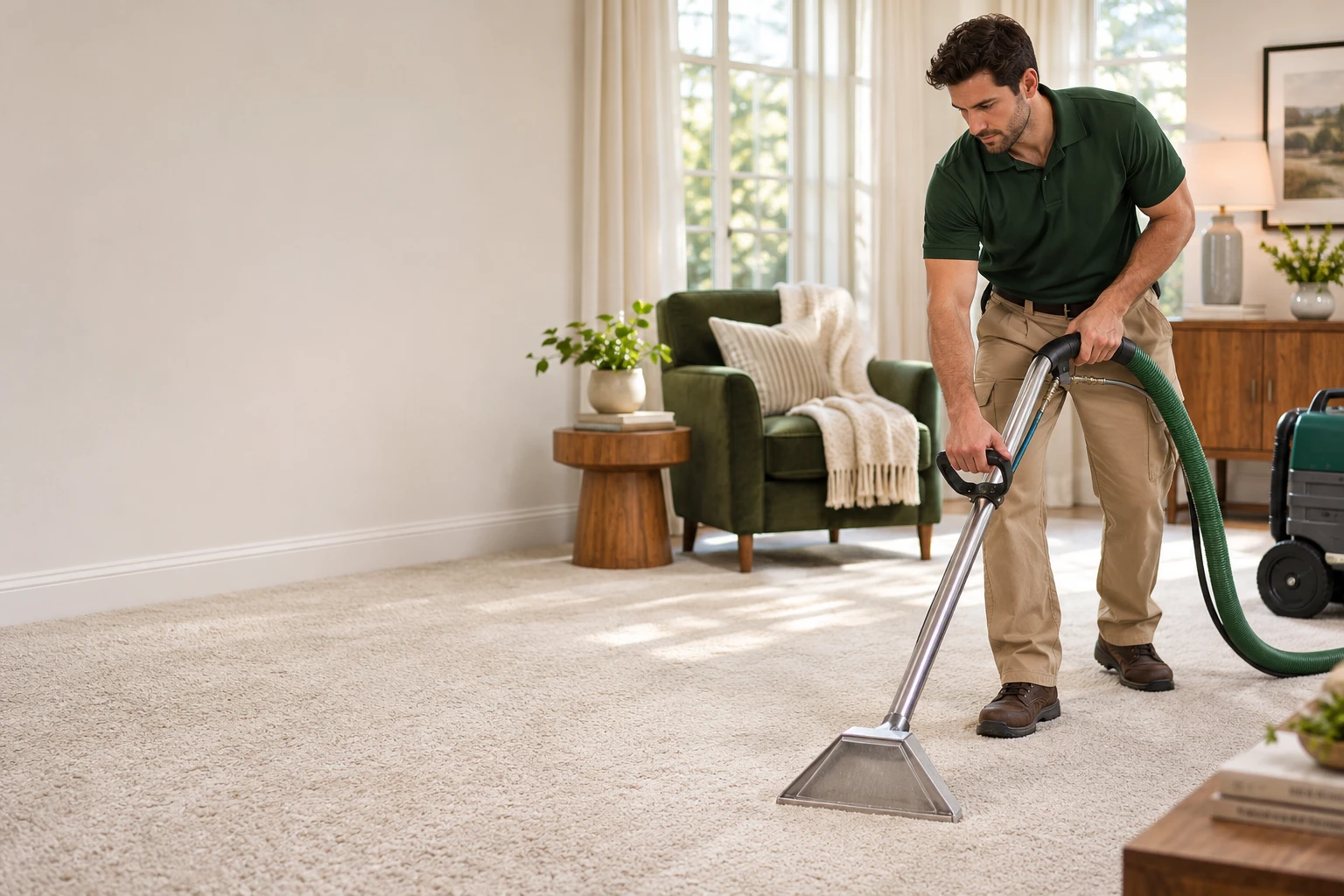
A good commercial visit is organized. The work may start at the entries and traffic lanes, then move into offices or meeting rooms as they become available. Spots in break rooms or corridors can be addressed as part of the same trip or called out as their own scope. If only part of a floor can be released at a time, the sequence should respect that.
Communication matters as much as the wand. The person who requested the work should know when the team will arrive, which areas will be done, and when those areas are expected to be ready for shoes and chairs. If something in the carpet cannot be improved — a permanent stain, a worn traffic lane, a previous installation issue — that is better said during the visit than discovered later.
SIGNS YOU MAY NEED IT
Traffic lanes are a kind of floor plan.
In a working building, the carpet tells you where people actually go. Entries gray first. Reception and corridors follow. A conference room may only need attention after events, while a break room collects spots all week. When vacuuming no longer changes those paths, or when a space is being prepared for new occupants or visitors, it is time to talk about a visit.
Other signs include odors in a closed office, or a stretch of time since the last thorough cleaning. Move-in and move-out cleaning may be the better page if the space is empty because a tenant is changing. Tile and grout care may belong in the same conversation.
For an estimate, share the type of space, the approximate area or a floor plan, photos, access instructions, and any timing constraints.
Request a commercial estimate ↗Good to know.
Do you work after hours?
Timing is part of the plan and can be discussed for each space. Mention the hours the rooms are available when you request an estimate, rather than assuming a particular schedule.
Can you clean around workstations?
Often, yes, but the plan should say what can be moved and what must stay. Cables, equipment and personal items should be mentioned in advance.
Is this a recurring maintenance contract?
This page describes commercial carpet care. Any regular schedule would be a separate agreement, discussed after the space and the need are understood. No set frequency is assumed here.
Can tile or spots be included?
Yes, when they are part of the agreed scope. Use this page as the starting point and mention the other surfaces, or add the tile and spot pages as a guide for what to describe.
What should I include in my estimate request?
The type of building, approximate area, photos or a simple floor plan, access and timing constraints, and any spots or rooms with special limits.
RELATED CARE
Other ways we can help.
These services often go together. Choose the ones that fit your space.
01
Explore all services ↗Steam & hot-water extraction
A thorough rinse-and-extract clean for installed carpet, often called steam cleaning.
↗02Carpet cleaning
Give the rooms you live in every day the attention they deserve.
↗03Tile & grout cleaning
A practical clean for tiled floors and grout lines that collect everyday soil.
↗