
Listen to the history of the area and inspect the carpet, fabric or rug for visible and less obvious traces.
For the places pets actually live.
Pet accidents are a different problem than an ordinary spill. Urine and other accidents can travel through the pile into the padding or even the subfloor, and the odor can return when the air is humid if the source is still there.
Request an estimate ↗(202) 555-0148WHAT’S INCLUDED
Follow the source, not just the surface.
Pet stain and odor care begins with finding where the problem actually is. A visible mark on the carpet may be only part of the story. Urine can spread wider than it first appears, travel along a pad, or reach a tack strip or subfloor. An odor that comes and goes with weather is a common sign that the source has not been fully reached.
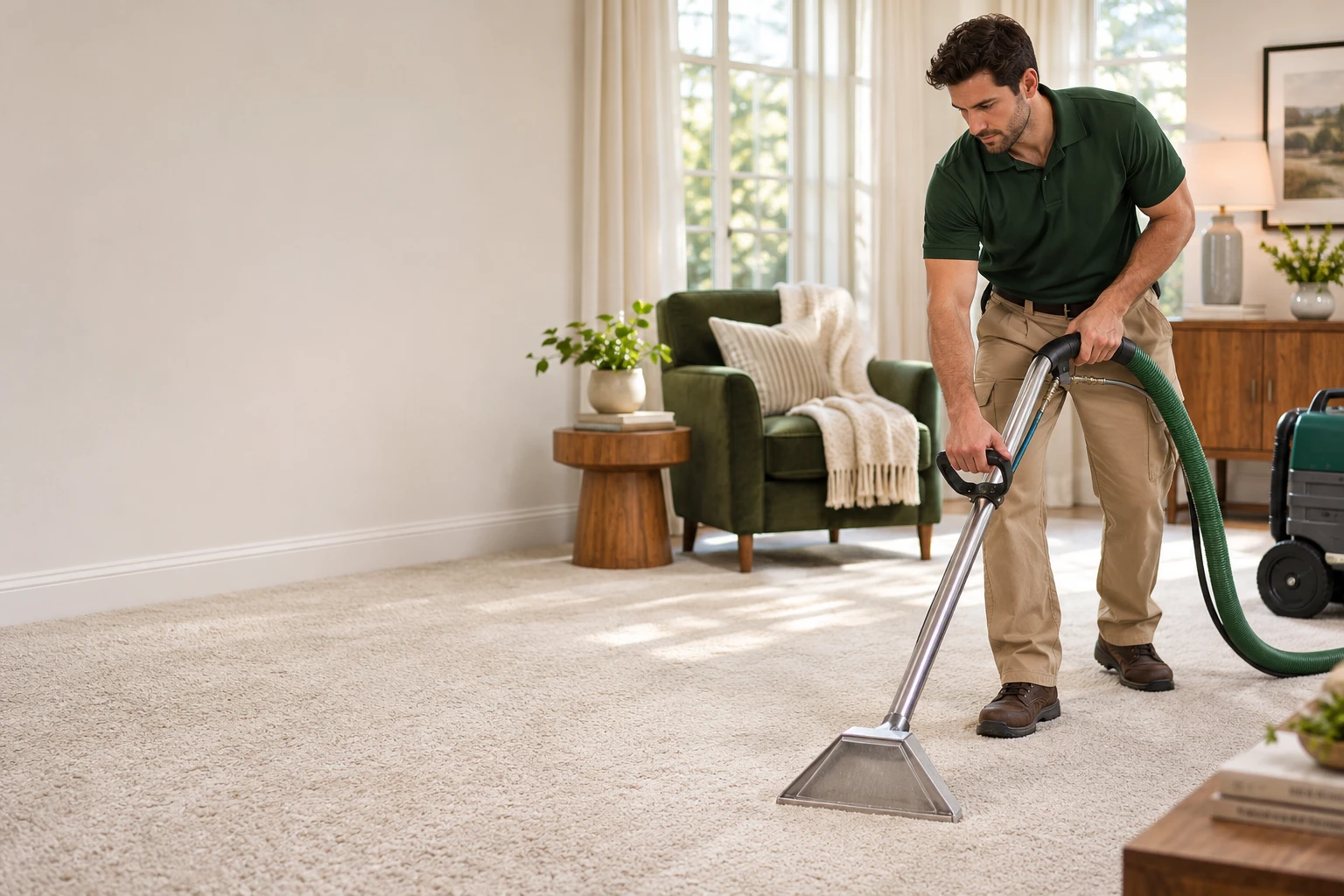
A typical visit includes a conversation about the pet and the history of the area, a close inspection of the carpet or fabric, and an effort to locate affected areas rather than treating a whole room blindly. Where it is appropriate, the surface is cleaned and a treatment suited to organic soils is used. If the padding or the underside of the carpet is involved, that finding changes the plan. The honest answer may be that the odor will not fully leave without work beyond a surface treatment.
This is not a general “pet deodorizing” spray-and-go visit, and it is not a guarantee that every accident can be made invisible or odorless. Some dyes shift when urine ages. Some fibers stain permanently. Some rooms have had many accidents over a long period. Those limits should be discussed before work begins, not after.
Upholstery, area rugs and installed carpet can all be affected, and each holds odor differently. A cushion or a rug pad can keep a problem in place even after the surface looks better. Mention every area you are concerned about, including rooms the pet uses at night or when you are away.
If you also want the rest of the room refreshed, pet care can be combined with a general carpet, rug or upholstery cleaning. Spot and odor care remains the better page for non-pet spills.
Locate the likely source, including whether padding or a backing may be involved.
Treat what can be reached with a method suited to the material, then clean the surrounding surface as needed.
Review what improved, what may remain, and whether further steps would be required for a deeper source.
THE PROCESS
Inspection first, then a plan that matches the source.
The most useful work happens before any treatment is poured. Mapping the affected area avoids chasing a smell around a room. It also prevents soaking a large section of carpet in the hope that more moisture will solve a deeper problem. If the inspection shows that the padding or subfloor is involved, that is the time to talk about options and limits.
Treatment then stays as targeted as the situation allows. The surrounding clean is there to blend the area with the rest of the floor, not to hide an incomplete odor repair. You should leave the visit knowing what was found, what was done, and what cannot be promised.

SIGNS YOU MAY NEED IT
When the odor has a usual corner.
Common signs include a repeating accident in the same place, a mark that looks clean when dry but returns in color or smell, a room that smells stronger on damp days, or a pet that keeps returning to one area. Soft furnishings near the floor, a favorite rug, and the path to a door are also worth mentioning.
A new pet, a change in household routine, or a recent move can all make this conversation more urgent. If you are preparing a room for a new use, say so in the estimate request so the inspection can be planned with that goal in mind, without treating the goal as a guaranteed outcome.
Please note the surface, the size of the area, whether the accident is recent or longstanding, and whether more than one room is involved. Photos help.
Request pet stain and odor care ↗Good to know.
Can pet odor always be removed?
No. When urine has reached padding or a subfloor, or when accidents have built up over a long time, a surface treatment may not be enough. The inspection should say so clearly.
Is this the same as ordinary spot cleaning?
Related, but not the same. Pet urine and other accidents often travel below the surface. Ordinary spills are covered on the spot and odor care page.
Should I clean the area myself first?
Blot what you can with a clean cloth. Avoid saturating the carpet or using a series of strong products, which can make later work harder. Tell us what you already used.
Can this be combined with a full carpet cleaning?
Yes. Many visits address a known pet area and then clean the wider room. Mention both needs in your request.
What should I include in my estimate request?
The room, the surface, how large the area is, how long it has been a problem, and whether padding or furniture may also be involved.
RELATED CARE
Other ways we can help.
These services often go together. Choose the ones that fit your space.